
If you tried to take direct photos of the sun (without a filter) during the recent solar eclipse using your cell phone or other camera and then promptly deemed it useless because the glare from the sun made it impossible to see the eclipse, well don't delete them just yet because your photos may not be as uninteresting as you thought.
Note: It is not recommended to point your camera directly at the sun without a filter (except for perhaps very short periods of time on a lens that does not have large optical zoom); it can damage your camera. But if you or someone you know has already done this, then keep reading to take advantage of it.For example, take a look at this photo snapped during the April 8th, 2024 solar eclipse. The sun was partially eclipsed at the time, but glancing at the photo, it looks like you'd never know. Would you?
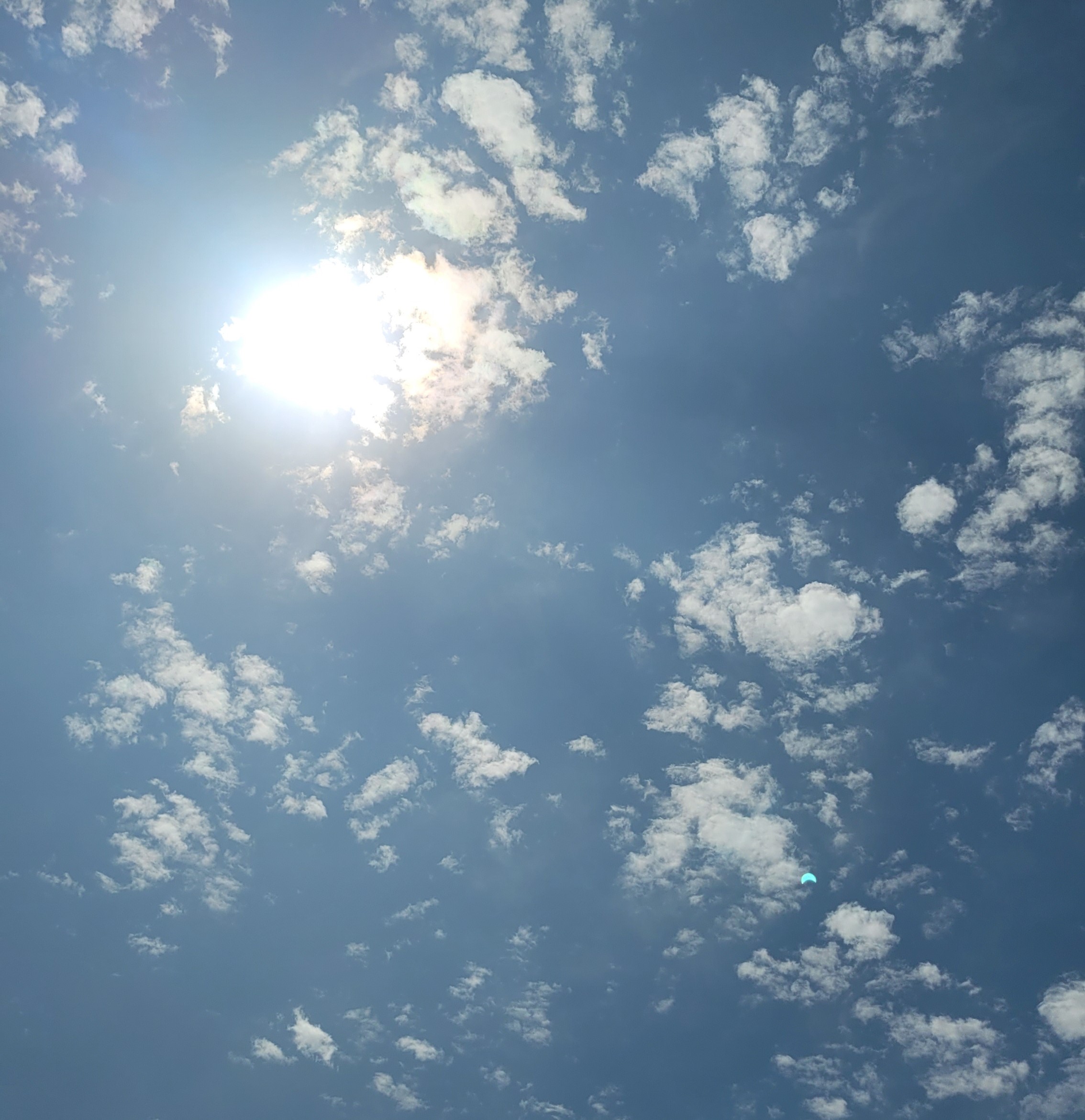
Actually, you would. Upon closer examination, even though the sun itself is overexposed, thanks to lens flare, the eclipse shape can be clearly seen in a completely different part of the photo. If you look closely at the bottom right of the photo, do you happen to see the shape we're looking for? This is lens flare from the sun. Lens flare is caused by light bouncing around inside the lenses in the wrong ways and happens when the camera is pointed at a very bright light. Most of the time it appears as strangely colored circles in your photo, probably because that's the shape of the light source. In this case, though, the light source is not a circle and look at what you see!
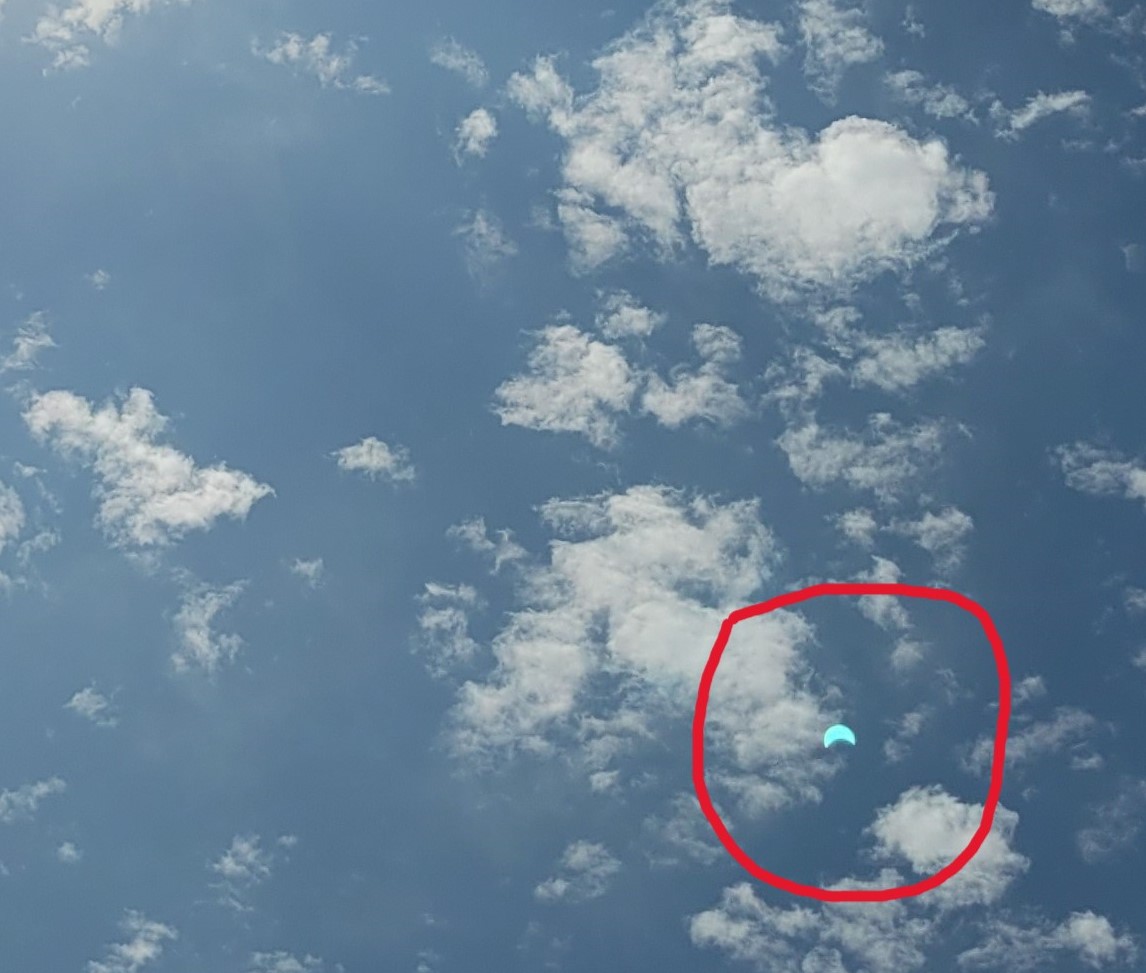
Here, accurately represented, in this seemingly glared-out photo, is the shape of the eclipse. So, scan your own photos for this effect. Personally, I have seen this now in multiple photos taken at different times during the eclipse with different cameras, so it's a lucky break for those of us without fancy photography equipment/skills/time who wanted to memorialize our experience during the Great American Eclipse.
More on eclipses? Also see: Great American Eclipse Timelapse at 25x Speed